The pain from an old wound.
I grew up in the nineties—a round-faced kid staring wide-eyed at the vibrant sci-fi and fantasy miniatures in the early editions of Warhammer. The colors were loud. The worlds were strange. The promise felt infinite. The far-future battlefields of Warhammer 40,000 and the claustrophobic underhive skirmishes of Necromunda were particularly formative to me.
But I was a child of scattered interests and limited means. I never managed to assemble anything resembling a proper force. My time at the local hobby store was mostly spent observing—flipping through rulebooks, studying display cases, imagining. I was always close to the game, but never quite inside it.
When I returned to the hobby in my thirties, I did what many returning players do: I dove in headfirst. I tried really hard to learn the game during 8th edition. I was studying my codex obsessively, even flirting with tournament play for a brief, intense two months.
But when two new codices dropped and changed the meta, I realized I would never master all of this. The constant churn of new rules every few months made the whole pursuit feel unsustainable. I stepped away because, in the end, it wasn’t bringing me joy.
Later, I stumbled upon Grimdark Future. A friend and I decided to give it a try. We enjoyed it immediately. The experience felt closer to what I had always imagined the game should feel like—streamlined, decisive, focused on the battlefield rather than the bureaucracy around it. It captured the essence without the weight. And yet, even that spark faded into the background. Life continued. The 6x4 table remained a logistical obstacle. The models remained boxed.
I’ve always had a thing for epic scale. The vastness of 6mm, that grand battlefield feel, was always a dream. For a long time, I stayed there or in 28mm—the classic scale of the game. But 15mm? I dismissed it for years. It felt like a strange middle ground—too big to be abstract, too small to feel truly epic.
A couple of years ago I saw people shrinking their battles and playing on dinner tables. I ignored it. Only recently, just for fun, I printed a few miniatures in 15mm. They looked surprisingly good. I convinced a friend we should try painting them. We painted somewhere around 70 or 80 figures in a single day, and we were very happy with the results. That day had a simple, joyful energy to it.
This project has only been an idea for about a week, but it feels exciting.
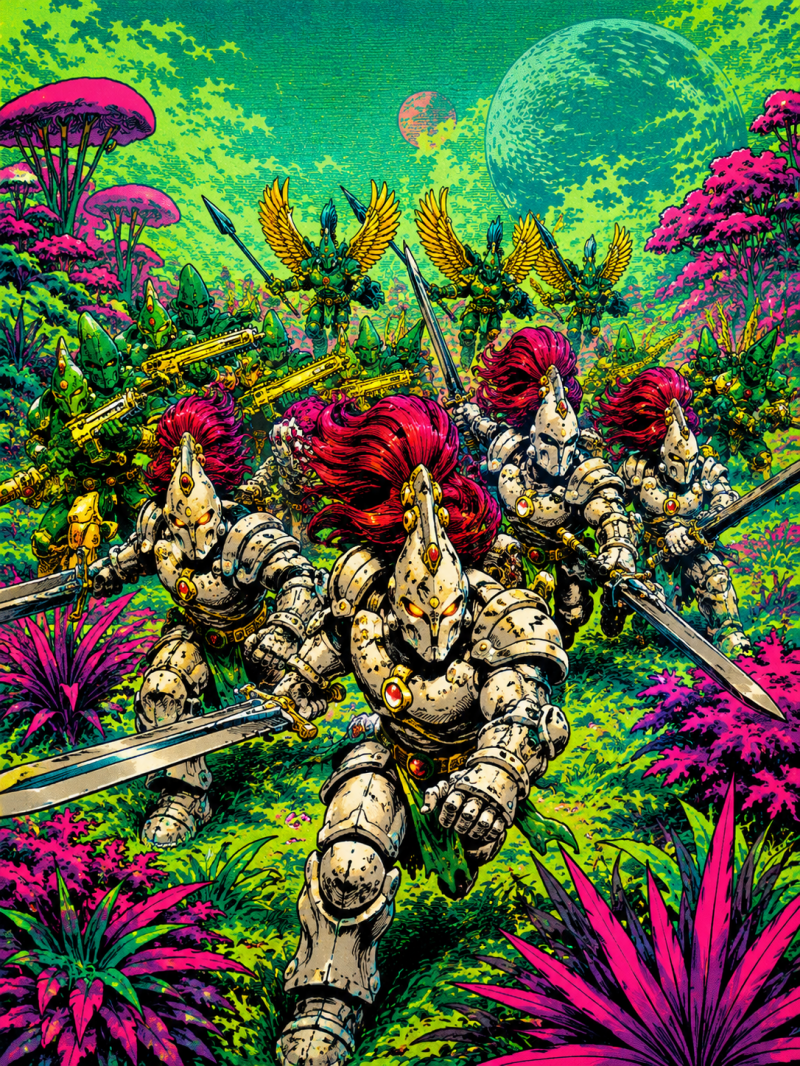
The plan is straightforward. Two armies: a space elf force and a crimson-clad power armor force. Bright, second-edition-inspired colors. A light green battlefield reminiscent of old catalog spreads. Infantry, transports, heavy support—the full structure of a proper force, just scaled down to fit on a 4x3 dinner table.
I’ll be using a multibasing approach: several miniatures per base. It looks better to me—like a small diorama—and it’s easier to handle. Fewer separate pieces mean less risk of damage and faster play. Grimdark Future supports this abstraction, allowing entire bases to function as units with a shared toughness value. It’s a compromise, but one that keeps the game moving.
With this entry, I’m setting out to document the steps of this project in a clear, repeatable way. In upcoming posts, I’ll log the paints I use, the techniques I rely on, and the small milestones I reach. The aim is to keep a practical record of how I build, paint, and refine these forces as the project unfolds.
Add comment
Comments